
When your car smells like gas, that is the one smell you never wave off. If it is strong, constant, or you see drips under the car: stop driving. That said, the most common causes are cheap: a loose gas cap, refueling spillover, or a small evap system leak. Check the 6 causes below in order, cheapest and most likely first.
On this page: When to stop driving The 6 causes Fair costs Inside vs outside FAQ
First: the stop-driving line
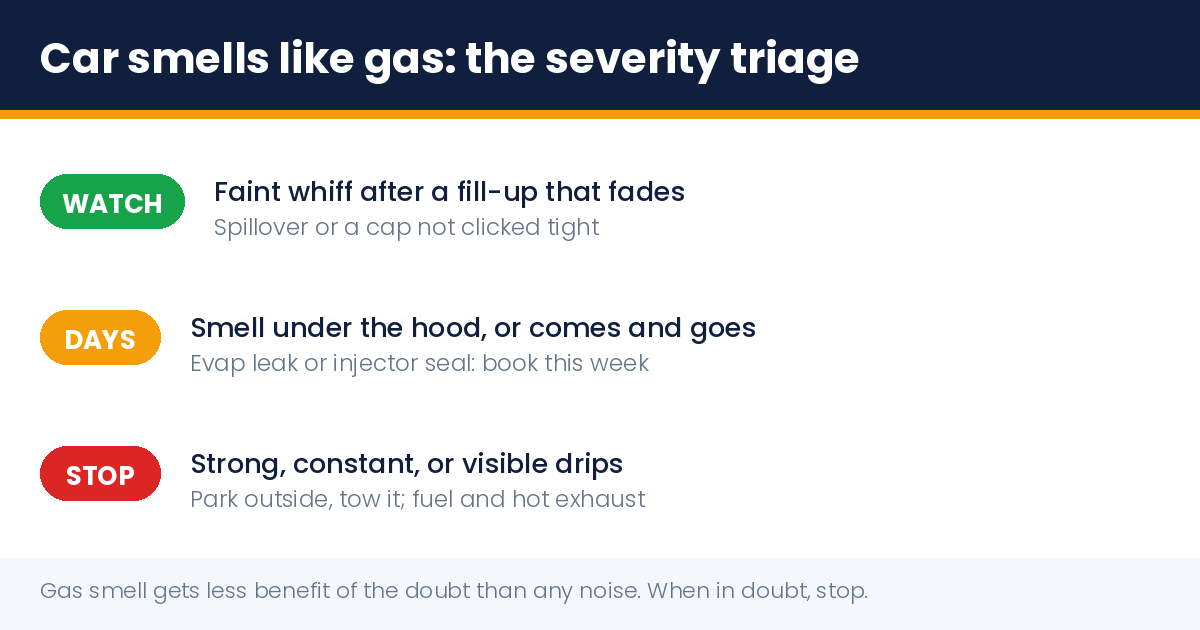
Gasoline vapor is flammable and breathing it is bad for you, so this symptom gets a bright line. Stop driving and get the car looked at today if the smell is strong inside the cabin, if it persists the whole drive instead of fading, if you can see wetness or drips under the fuel tank or engine, or if the smell comes with a rough-running engine. Park it outside, not in an attached garage, and skip the cigarette-lighter-adjacent activities. A faint whiff after filling up that fades in a few minutes sits on the calm side of the line, and the checklist below will usually find it.
The 6 causes, in the order to check them
1. The gas cap. Loose, cross-threaded, or with a cracked seal. Tighten until it clicks; if the cap’s rubber gasket looks dried or split, a replacement cap is $10 to $40. This also happens to be the classic trigger for evap trouble codes, so a gas smell plus a check engine light often shares one cheap fix.
2. Refueling spillover. A little gas on the paint, the filler neck, or your shoe rides home with you. Smell appears right after a fill-up and fades within the day. No repair, just patience.
3. An evap system leak. Your car stores fuel vapor in a charcoal canister and burns it later; a cracked hose or failed valve in that system leaks vapor smell without any liquid leak. Often comes with codes P0442 or P0455. Fixes run from a $20 hose to a $200 to $600 canister, and this is the most common reason a car smells like gas with no drips anywhere.
4. A leaking injector or fuel line seal. Smell concentrated under the hood, sometimes with rough idle or harder cold starts. O-rings and seals are cheap parts with real labor attached: $100 to $400 typically. Liquid fuel on a hot engine is the risk, so under-hood gas smell deserves a same-week appointment.
5. Old-car charm. Carbureted classics and some 90s cars just smell a little after a cold start or a hot shutoff. If your daily driver is newer than that, do not use this excuse; modern cars should not smell like gas.
6. An actual fuel leak. Rusted fuel lines, a punctured tank, a failed filler neck. Drips, wet spots, a smell that gets worse, mileage that suddenly drops. This is the stop-driving case, and it is a tow, because a fuel leak and a hot exhaust live inches apart.
What the fixes fairly cost
| The problem | Fair 2026 price | Urgency |
|---|---|---|
| Gas cap | $10-$40 | Whenever, it is a cap |
| Evap hose or valve | $20-$300 | Weeks |
| Charcoal canister | $200-$600 | Weeks |
| Injector O-rings / fuel rail seal | $100-$400 | Days |
| Fuel line or tank repair | $150-$800 | Now, by tow |
Ranges are national, independent-shop figures, July 2026. Evap diagnosis is smoke-machine work and honestly billable at the standard diagnostic hour; the machine finds in minutes what guessing finds in parts receipts. While you are thinking about fuel systems, a free minute on NHTSA’s recall lookup with your VIN is worthwhile, because fuel system components are recurring recall items.
Where the car smells like gas is another free clue
Where the smell lives helps aim the search. Strongest at the rear of the car or near the filler door: think cap, filler neck, tank, or evap canister, which usually mounts near the tank. Strongest under the hood: injectors, fuel rail, or a line running forward.
Inside the cabin mostly, especially with the heater or vents on: the smell is being pulled in from the engine bay, which still points under the hood, or in station wagon and SUV shapes, from a rear-mounted leak riding the airflow. Telling the shop “strongest at the back bumper after a fill-up” against “under the hood at idle” meaningfully shortens the hunt you are paying for.
Gas smell FAQ
Is it safe to drive when my car smells like gas?
A faint, fading, just-refueled whiff: yes, watchfully. A strong, constant, or growing smell, anything with visible drips, or fumes inside the cabin: no. The downside risk with fuel is fire, which is why this symptom gets less benefit of the doubt than any noise on this site.
Why does it smell like gas only when I start the car cold?
Cold starts run rich, and a small evap or injector seep is most noticeable before the engine and exhaust warm up and burn it off. It still deserves the checklist; cold-start-only is a clue, not a pass.
Can a gas smell make me sick?
Yes, fuel vapor in a closed cabin can cause headaches and dizziness, and it is not something to marinate in daily. Windows down, fan on fresh air rather than recirculate, and move the diagnosis up your list.
The smell comes and goes. Does that mean it is nothing?
It usually means it is an evap leak, which vents vapor under some conditions and not others: after fill-ups, in heat, on certain fuel levels. Intermittent is a pattern, and patterns are exactly what the smoke test finds.