
The typical brake job cost in 2026 is $130 to $320 for pads on one axle at an independent shop. Pads plus rotors runs $250 to $500 per axle. If your quote is higher than that, the difference should be visible in exactly three numbers: parts, labor hours, and the shop’s labor rate.
On this page: The three numbers What raises the price Rotors When to skip it Questions FAQ
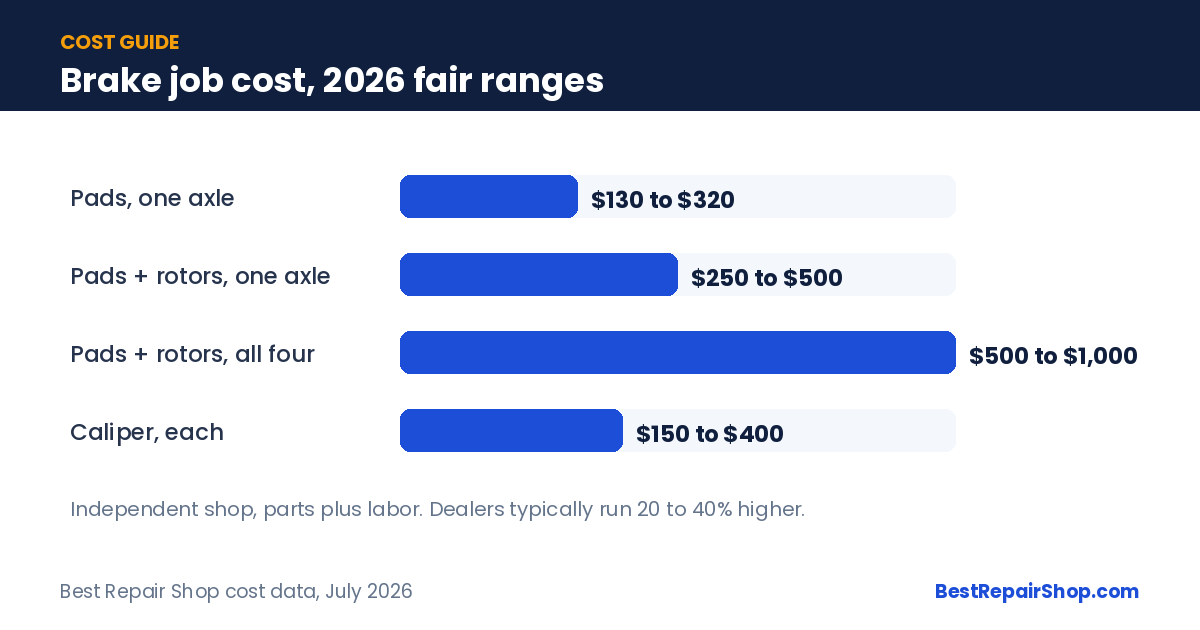
The three numbers inside every brake job cost
Every legitimate repair quote is the same formula: parts + (hours x labor rate). There is no fourth ingredient. Brake pads take a shop that does them every day about 0.8 to 1.2 hours per axle. Independent shop labor rates in the US mostly fall between $90 and $150 an hour, with big-city shops higher and rural shops lower.
Run the math on a typical quote: $80 in pads plus one hour at $130 lands at $210. That is a fair ticket. When a $450 quote shows up for the same job, do not ask “is that a lot?” Ask which of the three numbers is inflated. Either the pads are premium (sometimes legitimate), the hours are padded (rarely legitimate for pads), or the rate is dealership-level (your choice to pay or not).
| Job | Parts | Labor hours | Fair total (independent shop) |
|---|---|---|---|
| Pads, one axle | $40-$120 | 0.8-1.2 | $130-$320 |
| Pads + rotors, one axle | $150-$300 | 1.0-1.5 | $250-$500 |
| Pads + rotors, all four wheels | $300-$600 | 2.0-3.0 | $500-$1,000 |
| Calipers (each, if truly seized) | $90-$250 | 0.5-1.0 | $150-$400 |
| Brake fluid exchange (add-on) | $15-$30 | 0.5 | $80-$130 |
National ranges, July 2026, independent shops. Dealerships typically run 20-40% higher on labor and quote OEM parts by default. State-level labor rates are coming to our cost guides hub so you can check these numbers against your own zip code.
What legitimately moves the price up
Some of the gap between two brake job cost quotes is physics, not padding. Heavier vehicles need bigger pads and rotors: a full-size truck’s brake parts genuinely cost more than a Corolla’s. Performance and ceramic pads cost more than semi-metallic. Seized hardware on a rust-belt car can add real labor time. And European makes often carry electronic parking brake procedures that add a scan-tool step.
What is not legitimate: a “brake system flush” bundled into every job without a moisture test reading, rotors replaced when they still measure above the minimum thickness stamped on the rotor itself, and “calipers while we’re in there” on a car with no symptoms of a sticking caliper. Each of those has a measurement behind the honest version. Ask for the number.
Rotors: resurface, replace, or leave alone
Rotors only need attention when they are warped (you feel pulsing in the pedal), scored, or below minimum thickness. Resurfacing is cheaper but only possible when enough metal remains; many shops skip straight to replacement because new rotors are cheap and machining time is not. That trade is often reasonable. Replacing rotors that measure fine and feel fine is not. The rotor’s minimum thickness is stamped on it, and the measurement takes thirty seconds with a micrometer.
When you don’t need this repair
Squeaking alone is not a verdict. New pads squeak in humid weather, some pad compounds squeak lightly their whole life, and a one-time squeal on a damp morning is usually nothing. If your pads measure more than 4 millimeters and the pedal feels normal, you are likely months away from needing anything. Ask for the pad thickness in millimeters. An honest shop answers with a number; a padded quote answers with an adjective.
Grinding is the opposite case. That sound is the backing plate cutting into your rotor, and every mile converts a $130 pad job into a $400 pads-and-rotors job. Squeak means schedule it; grind means stop. And before you pay for anything, check your VIN against the NHTSA recall database: brake components do get recalled, and recall work is free at a dealer.
Questions to ask before you approve
- “What is the pad thickness measurement right now, in millimeters?”
- “Is this quote per axle or for all four wheels?” The most expensive ambiguity in brake work.
- “Are the rotors below minimum thickness, or is this preventive?”
- “What brand and grade of pads are you quoting?”
- “What is the labor rate on this ticket, and how many hours?”
If a shop resists any of those, that is information too. The FTC’s auto repair basics covers what a written estimate has to include and what a shop must get your approval for before adding it to the bill.
Brake job cost FAQ
Why did the dealership quote nearly double what the independent shop did?
Dealer labor rates run $150-$250 an hour against $90-$150 at independents, and dealers quote OEM pads by default. For out-of-warranty brake work, a good independent shop with quality aftermarket ceramic pads is usually the equal-or-better value. The exception is warranty or recall work, which the dealer does free.
Are those $99 brake special coupons real?
They advertise a brake job cost that applies to the cheapest pads on the easiest cars, and they fund the upsell inspection that follows. Sometimes the total stays reasonable. Walk in knowing the three numbers and the fair ranges above, and the special can work for you instead of on you.
Can I do brake pads myself?
Pads on most mainstream cars are a genuinely achievable driveway job with a jack, stands, and a C-clamp, and the savings are real. But brakes are also the one system where a mistake is unforgiving. If you have never done it, do the first one alongside someone who has. There is no shame in paying a fair price for work this important.
How long do brake pads last?
That interval is what spreads the brake job cost across the years you own the car. Most pads run 30,000 to 70,000 miles depending on driving style, vehicle weight, and city versus highway mix. Rideshare-style stop-and-go city driving wears pads at nearly double the highway rate, which is why two identical cars can need brakes years apart.