
Engine knocking is the one engine noise that never fixes itself. Light pinging under acceleration can be a $0 to $40 fuel fix, a failed knock sensor runs $150 to $400, and a deep rod knock means bottom end work that starts near $2,500. The smartest money you will spend is one diagnostic hour at $75 to $200.
On this page: What it is · Why it is serious · 4 causes · Next steps · Costs · FAQ
What Engine Knocking Actually Is
Healthy combustion is one clean flame front, lit by the spark plug, pushing the piston down in one smooth shove. Engine knocking happens when fuel ignites where and when it should not: pockets of the mixture explode on their own, and the colliding pressure waves rap the piston like a small hammer. That metallic rattle you hear under load is literal metal being hit.
Where the sound lives matters. A sharp ping or marble rattle from the top of the engine under acceleration is usually a combustion problem. A deep, rhythmic knock from low in the block that speeds up with the engine is a mechanical problem, and a far more expensive one. Our symptoms guides cover the gentler engine noises; this is not one of them.
Why You Do Not Wait This One Out
Every knock event spikes cylinder pressure far beyond what the engine was designed to hold. Run with it long enough and it chews up piston crowns, ring lands, and rod bearings. I have watched a $40 octane mistake become a $4,000 engine because somebody turned the radio up for three months. Engine knocking never gets cheaper by waiting; it just moves down the invoice, from fuel to metal.
The 4 Causes, From Cheap to Catastrophic
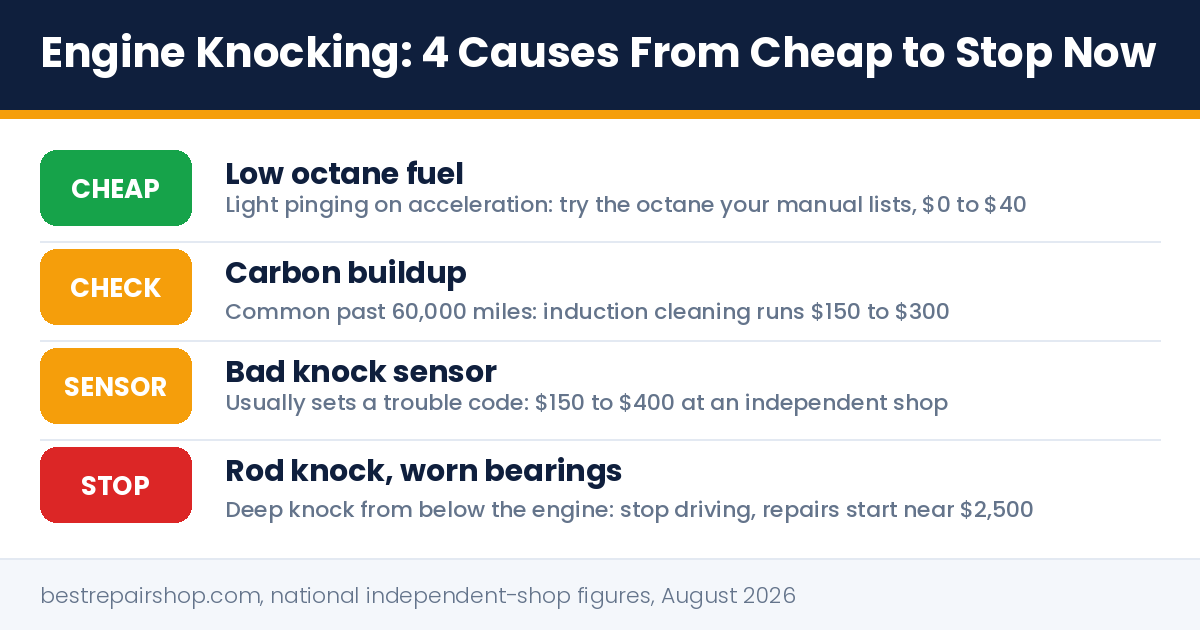
1. Wrong octane. If your manual calls for premium and the tank got regular, the mixture can self-ignite under load. Modern computers pull ignition timing to protect the engine, but they can only pull so far. One tank of the right fuel, $0 to $40 extra, often ends light pinging within a drive or two.
2. Carbon buildup. Deposits on pistons and valves raise compression and glow hot enough to light fuel early. This gets common past 60,000 miles, especially on direct injection engines that live on short trips. An induction cleaning runs $150 to $300 at an independent shop. Skip the $450 dealer version of the same chemistry.
3. A failing knock sensor. This little microphone tells the computer to back off timing the instant knock starts. When it dies, the engine can knock with no protection, and it usually sets a diagnostic trouble code. Parts and labor run $150 to $400 on most cars.
4. Rod knock. Worn rod bearings let the connecting rod slap its crank journal: a deep, hollow knock from the bottom of the engine, loudest when warm and under light load. The usual cause is oil starvation from stretched oil changes or simply running low. This is the one that totals engines.
4 Honest Next Steps Before You Spend Big
First, check the oil level right where the car sits. A deep knock with a dry dipstick is a stop-driving situation. Adding oil will not undo the wear, but it can keep a sick engine alive long enough to reach a shop instead of a scrapyard.
Second, run one tank of the octane your manual lists. If the noise is light ping under acceleration and it fades with correct fuel, you just fixed it for pocket change. Keep buying that octane; it is cheaper than anything else on this page.
Third, buy one diagnostic hour before accepting any big verdict. A shop that listens with a stethoscope, scans for codes, and puts oil pressure numbers on paper earns its $75 to $200 diagnostic fee. Guessing with parts always costs more than measuring.
Fourth, get any bottom end estimate in writing and take it for a second opinion. The FTC auto repair guide backs you here: you can ask for a written estimate and your old parts. A $2,500 quote deserves a second set of ears.
What Engine Knocking Repairs Cost in 2026
Here is the honest spread. Engine knocking repairs run from a tank of gas to a replacement engine, and paying for a real diagnosis is what keeps you from landing on the expensive end by accident.
| Repair | Fair price |
|---|---|
| Diagnosis, scan and listen | $75-$200 |
| Tank of correct octane fuel | $0-$40 extra |
| Induction or carbon cleaning | $150-$300 |
| Knock sensor replacement | $150-$400 |
| Rod bearing or bottom end repair | $2,500-$5,000 |
| Used or remanufactured engine, installed | $4,000-$8,000 |
Ranges are national, independent-shop figures, August 2026. Dealers typically land 20 to 40 percent higher on the same work, and bottom end jobs vary widely by engine, so treat the top rows as the goal and the bottom rows as the reason to hurry.
Knock Questions, Answered Straight
Can I drive with engine knocking?
If it is a light ping that only shows up under hard acceleration, you can drive gently to the gas station and then to a shop. If it is a deep knock from the bottom of the engine, no: a $100 tow is the cheapest line on that invoice. When in doubt, park it and make a phone call.
Will thicker oil quiet a rod knock?
It can muffle one for a while, which is why it is a classic used car seller trick. It does not repair worn bearings, and the wear keeps compounding under the quieter sound. Treat thicker oil as a limp-to-the-shop measure, never a fix.
Why does my engine only knock when accelerating?
Load is when cylinder pressure and heat peak, so marginal fuel or carbon deposits cross the line only then. That pattern actually points toward the cheap end of the table: octane, carbon, or the sensor. A steady knock at idle that follows engine speed points toward the mechanical end.
Could a recall cover my knocking engine?
Sometimes, yes. Several high volume engines have had recalls or extended warranties for premature bearing wear. Run your VIN at the NHTSA recall lookup before you approve a big repair. Ten minutes of typing has saved people four figure invoices.