
The short answer on when to change cabin air filter is every 12,000 to 15,000 miles or once a year, whichever comes first, and sooner if you drive dusty roads or park under trees. The part costs $15 to $30, the swap takes about 5 minutes behind most glove boxes, and shops charge $50 to $110 for the same job. That gap is the easiest money in car maintenance to keep.
On this page: Honest interval 5 signs Musty smell 5 minute DIY Costs FAQ
When to Change Cabin Air Filter: Honest Intervals
The cabin air filter cleans the air coming through your vents, not the air going into the engine. Most owner’s manuals call for a change every 12,000 to 15,000 miles, and once a year is a fine rule if you do not track miles. If you search when to change cabin air filter, you will find shops pushing every oil change; that is a stretch for most drivers and a classic add-on upsell.
Where you drive matters more than the calendar. Dusty gravel roads, heavy pollen seasons, city stop-and-go behind diesel trucks, or parking under trees that drop leaves into the cowl can cut the honest interval in half. A rural commuter in dry country might need one every 7,500 miles; a garage-kept highway car can stretch past a year without a problem.
5 Signs Yours Is Done
Your car usually announces when to change cabin air filter well before any maintenance light does. The five signs worth trusting: airflow from the vents feels weaker even on high fan, a musty or dusty smell shows up when the fan kicks on, the windows fog up and take forever to clear, allergies act up in the car but not outside it, and the fan sounds louder than it used to because it is straining against a clogged filter.
There is also a free 10 second check: pull the filter out and look at it. A clean one is white or light gray. If yours looks like a lint trap, holds leaves and seeds, or has dark mold spots, it is done. No judgment; every filter looks shocking the first time.
That Musty Smell When the AC Kicks On
A musty, gym-sock smell at startup is the cabin filter’s loudest complaint. Moisture condenses in the AC box, the filter traps organic debris, and the combination grows mildew. A new filter fixes it most of the time; a can of evaporator cleaner handles stubborn cases. If the smell survives both, the evaporator itself may need attention, and that is worth reading our car AC repair cost guide before anyone quotes you big numbers.
One caution: a rotten egg or sulfur smell is not a cabin filter problem, and neither is a fuel smell. Those deserve prompt attention, not a $20 part. When in doubt, our symptoms library sorts car smells by cause.
The 5 Minute Change, Step by Step
On most cars the filter lives behind the glove box, and the job needs no tools. Open the glove box and empty it. Squeeze the sides or pop the small stops so it swings down. Slide out the filter tray, note which way the airflow arrow points, and slide the new one in matching that arrow. Swing the glove box back up. That is the whole job, and it is the gateway DIY that convinces people they can also handle an engine air filter.
Buying the filter, you will see two types: standard particulate for $15 to $30 and activated carbon for $25 to $50. Carbon versions absorb odors and exhaust fumes and are worth the upgrade if you sit in traffic. Skip anything sold as a dealer-only part; the aftermarket versions filter the same air.
What It Costs: DIY vs the Shop
| Where | Typical price | Worth knowing |
|---|---|---|
| DIY, standard filter | $15-$30 | 5 minutes, no tools on most cars |
| DIY, carbon filter | $25-$50 | Better odor control in traffic |
| Quick lube add-on | $40-$70 | Often pitched with every oil change |
| Independent shop | $50-$90 | Fair if bundled with other work |
| Dealer service visit | $70-$110 | Highest markup on the same part |
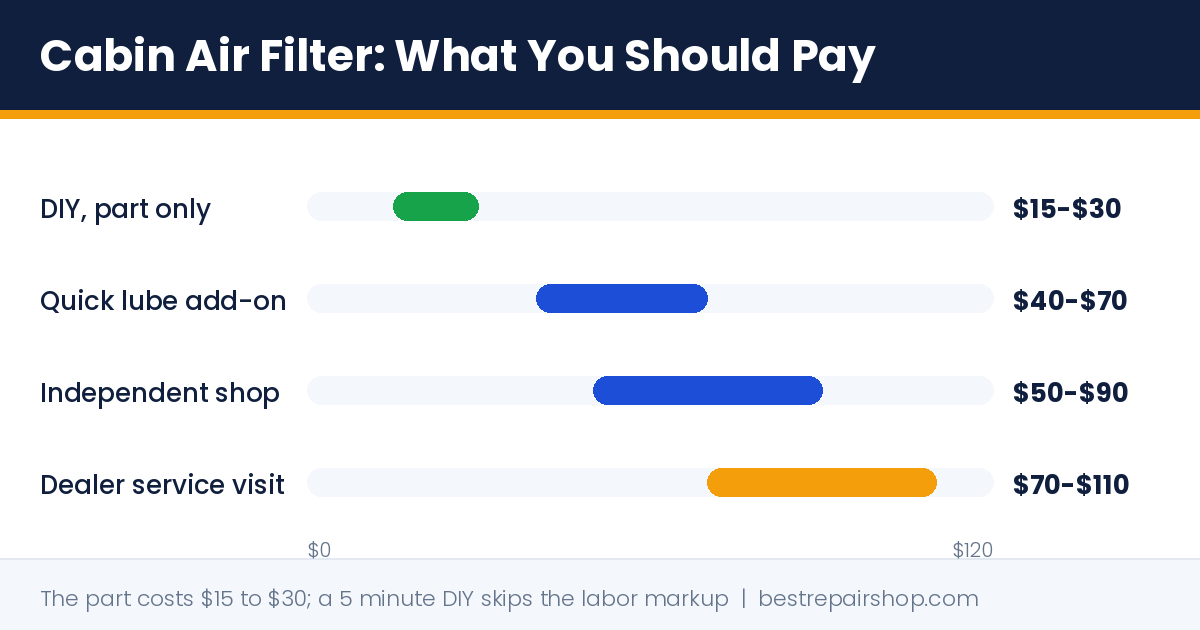
Ranges are national, independent-shop figures, August 2026. The labor is minutes, so most of what you pay a shop is markup and convenience. The FTC’s auto repair basics guide is clear that you can decline any add-on service and ask to see the old part; a shop showing you a filthy filter is being helpful, but you are still allowed to say you will do it yourself.
FAQ
When to change cabin air filter in dusty areas?
Cut the interval roughly in half: every 7,500 miles or twice a year. Gravel roads, construction zones, and dry pollen-heavy regions load a filter fast. Do the visual check at each season change and let the filter itself make the call.
What happens if I never change it?
Nothing dramatic, and that is the trap. Airflow drops, defrosting slows, smells settle in, and the blower motor works harder than it should for years. A chronically starved blower can wear out early, which turns a $20 part into a repair bill. The engine is unaffected; this filter only protects you.
Does the cabin air filter affect AC performance?
Yes, more than people expect. The AC can be making perfectly cold air that simply cannot get through a clogged filter, so the car cools slowly and the fan runs loud. Before paying for an AC diagnosis, check this filter; it is the cheapest possible fix for weak airflow.
Is it the same as the engine air filter?
No. The engine air filter feeds the engine and lives under the hood; the cabin filter cleans vent air and usually lives behind the glove box. They age on different schedules, so check them separately. A shop quoting both at once is not wrong, but price each on its own.