
A fair car AC recharge cost in 2026 is $150 to $300 at an independent shop, refrigerant, machine evacuation, and a system check included. DIY kits run $30 to $60 and skip the part that matters: finding out where the old refrigerant went. Refrigerant does not get used up. If you are low, you have a leak, and that fact drives every dollar on this page.
On this page: Fair price What is included DIY kits The upsell If it will not hold FAQ
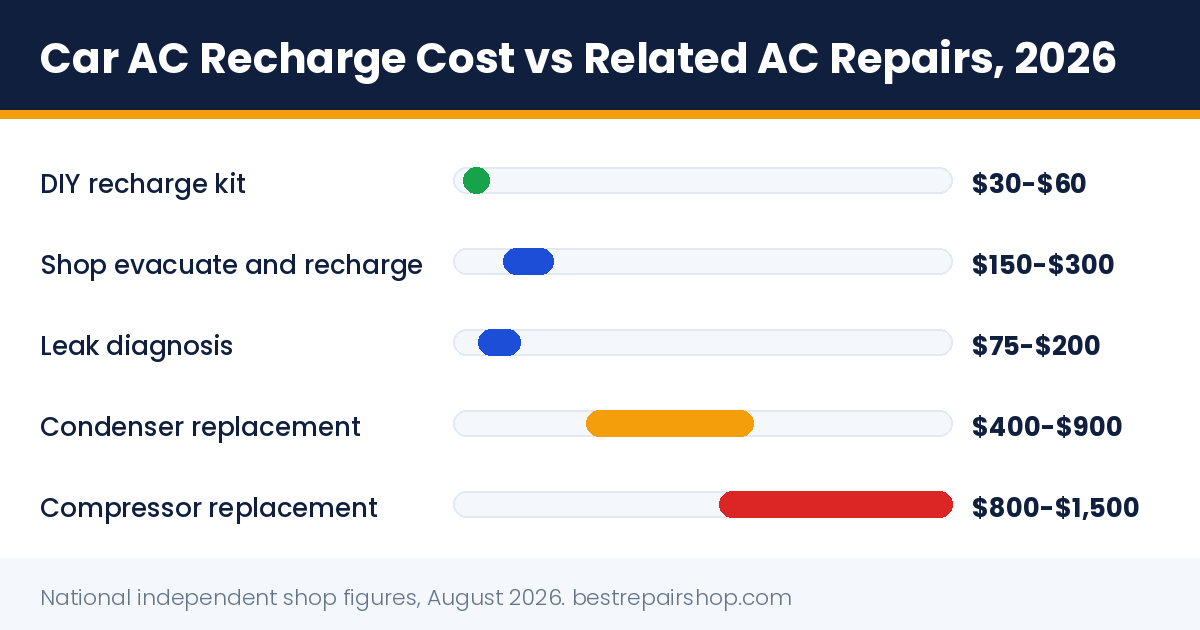
Car AC recharge cost: the fair 2026 range
Nationally, an evacuate and recharge at an independent shop runs $150 to $300. Dealers charge more for the same machine and the same refrigerant. Cars using the newer R1234yf refrigerant, which is most vehicles built since about 2017, land at the top of that range because the refrigerant itself costs several times what the older R134a does. Here is how the car AC recharge cost stacks up against the jobs a recharge sometimes turns into.
| Service | Fair 2026 price |
|---|---|
| DIY recharge kit | $30-$60 |
| Evacuate and recharge, independent shop | $150-$300 |
| Leak diagnosis (dye or electronic) | $75-$200 |
| Condenser replacement | $400-$900 |
| Compressor replacement | $800-$1,500 |
Ranges are national, independent-shop figures, August 2026. If a quote lands far outside them, ask what is different about your car. Sometimes there is a real answer. Often there is a pause.
What $150 to $300 should actually include
A proper recharge is not a top up. The shop connects a recovery machine, pulls out whatever refrigerant is left, weighs it, pulls the system into vacuum to check that it holds, and refills with the exact charge weight printed on the sticker under your hood. That vacuum step is quietly the diagnosis: a system that cannot hold vacuum for 20 to 30 minutes has a leak worth finding.
On the invoice, look for the charge weight and refrigerant type, a note on how much refrigerant came out, and whether dye was added. A shop that writes down “recovered 4 oz of a 16 oz charge” is showing you its work. That is the paperwork of an honest recharge, and it is what makes the price fair instead of merely low.
The $30 DIY kit: an honest appraisal
The parts store kit with the pressure gauge on the trigger can absolutely get you a cold summer for $30 to $60, and for an older car you plan to sell, that may be the rational move. But the kit cannot evacuate the system, cannot weigh the charge, and its gauge reads one side of a two sided system. Overcharging is the common result, and an overcharged system cools poorly and works the compressor hard, which is how a $40 fix becomes an $800 part.
The honest rule: one DIY can per car, ever. If the cold fades again, the leak has outgrown the kit. Many of the sealer additives in those cans can also gum up shop recovery machines, and some shops now charge extra when they find sealer in the system. Mention it if you have used one; it is cheaper than having them discover it.
The upsell to avoid: the annual recharge subscription
Here is the one that pads invoices every June. The AC blows warm, the shop recharges it for $200, and everyone is happy until next summer, when the same car gets the same recharge. No leak test, no dye, no conversation. That is not maintenance; that is a subscription, one that turns a one time car AC recharge cost into an annual bill. Refrigerant only leaves through a leak, so a recharge without a leak check is a treatment with no diagnosis.
The fair version costs slightly more once and less forever: recharge with dye added, drive it a few weeks, then a $75 to $200 leak diagnosis that finds the o-ring or condenser stone strike actually responsible. Ask for a written estimate that lists the leak check as its own line. The FTC’s auto repair basics guide is blunt about getting estimates in writing, and it is your best friend in this conversation.
If it will not hold a charge
When the dye turns up a leak, the money question is where. An o-ring or service valve is often under $150 with the recharge. A leaking condenser, the usual victim of road debris, runs $400 to $900. A compressor shaft seal points toward the $800 to $1,500 compressor job. Our car AC repair cost guide breaks down every one of those numbers, and if your symptom is warm air rather than a known leak, start with our car AC blowing hot air diagnosis to make sure a recharge is even the right prescription.
FAQ
How often should a car AC need a recharge?
Ideally never. A healthy sealed system loses only a trace of refrigerant per year, so many cars go a decade without needing service. Once every 5 to 7 years for an aging car is within normal wear. Every summer is a leak wearing a maintenance costume.
How long does a recharge take at a shop?
Plan on 45 minutes to an hour and a half. The recovery and vacuum stages cannot be rushed, because the vacuum hold time is the leak test. A 15 minute recharge means someone skipped the step that protects your money.
Why is the car AC recharge cost higher on newer cars?
Refrigerant type. Most vehicles built since about 2017 use R1234yf, which costs several times more per pound than the older R134a and requires its own service machine. Same labor, pricier gas, so newer cars sit at the top of the $150 to $300 range.
Will a recharge fix AC that blows hot air?
Only if low refrigerant is the cause, which it often is but not always. A stuck blend door, a dead cooling fan, or a blown fuse produces the same warm vents with a full system. If a shop reaches for the recharge machine before checking whether the compressor even engages, ask them to check first.