
The oil pressure light means your engine has lost the oil pressure that keeps metal parts from grinding on each other, so pull over and shut the engine off within a minute or two. The fix can be as small as $8 to $40 of oil for a low level, around $100 to $250 for a failed sensor, or $400 to $1,500 for a worn oil pump. Ignoring it is how a $40 problem turns into a four figure engine job.
On this page: Meaning First 2 minutes 4 causes Fair costs Driving risk FAQ
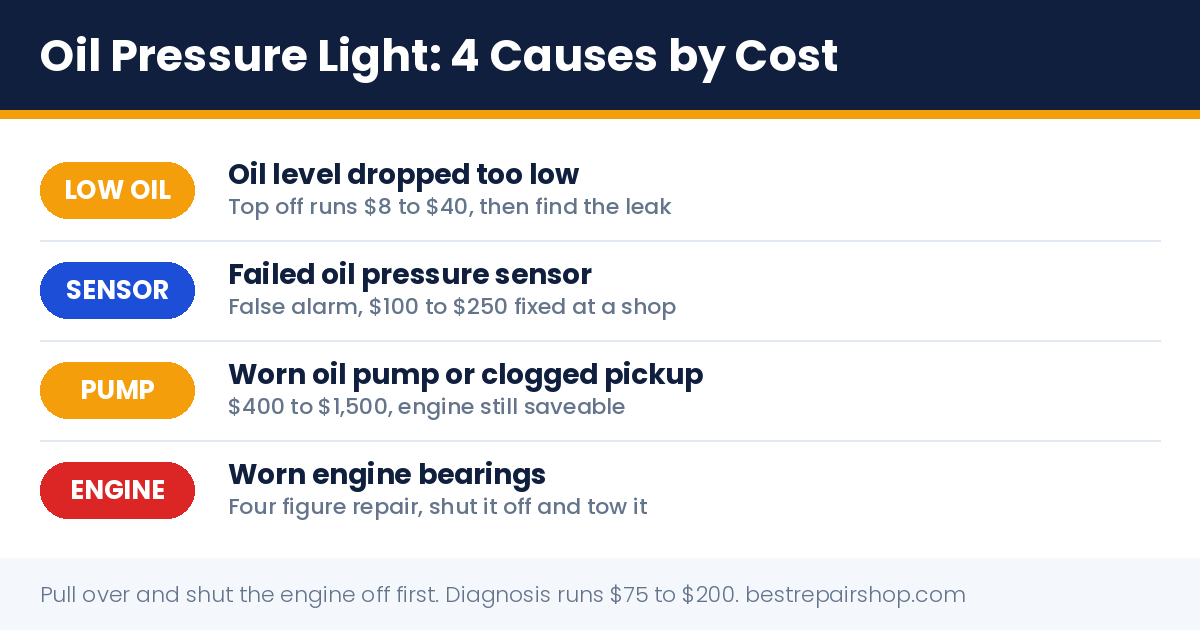
What the Oil Pressure Light Is Telling You
Your dashboard has polite lights and one alarm bell. The little red oil can is the alarm bell. It comes on when pressure in the lubrication system drops below a safe threshold, usually somewhere between 5 and 10 psi at idle. Below that, the thin film of oil that keeps your crankshaft and bearings from touching starts to break down.
This is not the amber oil change reminder, and it is not the low oil level warning some cars have. Those are calendar items. A red oil can while driving means the engine is being damaged right now, and the meter on that damage runs by the second, not by the mile.
The First 2 Minutes: Pull Over and Shut It Off
When the oil pressure light comes on, signal, get out of traffic, and shut the engine off. Not at the next exit, not after the school pickup line. A modern engine can survive a short low pressure event; it cannot survive twenty minutes of it.
Once you are stopped, wait a minute, then check the dipstick. If the level is at or below the low mark, adding oil may bring the pressure right back, and a quart or two runs $8 to $40. If the level is fine and the light returns when you restart, shut it down and arrange a tow. A tow bill is cheap next to an engine.
4 Causes, From an $8 Quart to a Real Repair
1. The oil level dropped too low. This is the most common cause and the cheapest. Engines burn and seep oil quietly, and if you are overdue for a change, the level can drift low enough that the pump pulls air in corners. Top it off, then find out where the oil went: a leak, worn rings, or simple neglect. Our guide to how often to change oil covers honest intervals.
2. A failed oil pressure sensor. The happy ending. The sensor or its wiring dies, the gauge or light cries wolf, and actual pressure is fine. A shop confirms it with a mechanical gauge before replacing anything, which is exactly the kind of check that separates careful shops from parts swappers.
3. A worn oil pump or clogged pickup screen. Sludge from stretched oil changes can block the pickup screen, or the pump itself wears out on a high mileage engine. This is real work, often buried under the oil pan, but the engine is usually still saveable if you shut it off quickly.
4. Worn engine bearings. On a tired engine, the clearances grow until normal pressure cannot keep up, often paired with a deep knock. If a shop mentions bearings, get the numbers in writing and read our take on engine knocking before approving anything. At that point you are pricing engines, not parts.
What Each Fix Costs at an Honest Shop
| Fix | Fair range |
|---|---|
| Top off oil (1 to 2 quarts) | $8-$40 |
| Oil pressure sensor, replaced | $100-$250 |
| Full synthetic oil and filter change | $65-$125 |
| Oil pump or pickup screen | $400-$1,500 |
| Diagnosis with mechanical gauge test | $75-$200 per hour |
Ranges are national, independent-shop figures, August 2026. If the oil pressure light turns out to be a sensor, a fair invoice looks like one hour of diagnosis plus the part. If someone quotes an oil pump without ever hooking up a mechanical gauge, ask why. Full oil change pricing lives in our oil change cost guide.
Can You Drive With the Light On?
No. This is the one symptom where we will not give you a comfortable middle answer. Flickering at idle that goes away with revs buys you a careful drive to a shop with the level topped up. A solid oil pressure light at speed means shut it off and tow it. The FTC’s auto repair basics guide is worth a read while you wait for the truck: you will be authorizing diagnosis, and it helps to know your rights before anyone starts work.
Oil Pressure Light FAQ
Can I just add oil and keep driving?
If the dipstick was low and the light goes out after topping off, yes, drive gently and get the level and the leak looked at soon. If the light stays on with a full dipstick, no. Adding oil does not fix a pump, a clogged pickup, or a sensor, and you will not know which one you have until it is tested.
Is the oil pressure light the same as the oil change reminder?
No, and mixing them up is expensive in one direction only. The maintenance reminder is usually amber text like “Oil Life 5%” and means schedule a change. The red oil can means pressure is gone right now. Treat red as an emergency and amber as a calendar item.
How much does the sensor cost to replace?
Nationally, $100 to $250 at an independent shop for the common single wire or three wire senders, parts and labor. A few engines bury the sensor under the intake manifold, which can push labor higher. Ask the shop to confirm actual pressure with a mechanical gauge first so you are not paying to replace a working part.
What if the light only flickers at idle?
Flicker at hot idle that clears when you rev is the classic early sign of a tired pump, worn bearings, or oil that is old and thin. It is less urgent than a solid light but it is not nothing. Check the level, use the correct viscosity, and book a pressure test this week, not this quarter. A ticking sound alongside it points the same direction; see our guide to engine ticking noise.