
Transmission fluid change cost in 2026: a basic drain and fill runs $100 to $250, a machine exchange (the “flush”) runs $150 to $400, and adding the filter and pan gasket adds $75 to $150. CVTs and some European automatics cost more because their fluid does. The honest question is not the price; it is which service your transmission actually needs.
On this page: The prices Drain vs exchange When it is worth it The upsell test FAQ
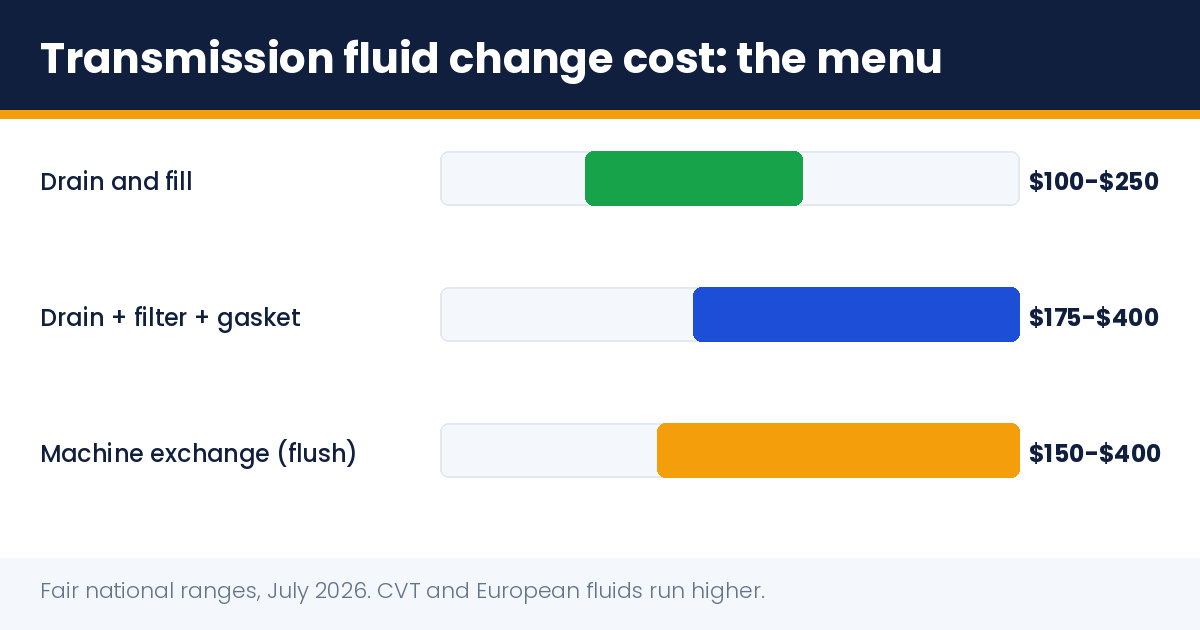
Transmission fluid change cost: the full menu
| Service | Fair 2026 price | What you get |
|---|---|---|
| Drain and fill | $100-$250 | Replaces 30 to 50 percent of the fluid |
| Drain and fill + filter + gasket | $175-$400 | The most complete conventional service |
| Machine exchange (flush) | $150-$400 | Replaces nearly all the fluid |
| CVT fluid service | $150-$450 | CVT-specific fluid is pricier; never substitute |
| European/ZF-style service with pan | $300-$700 | Fluid, integrated filter-pan, and coding |
Ranges are national, independent-shop figures, July 2026. Fluid itself drives the spread: standard ATF is cheap, while some manufacturer-specific fluids cost $15 to $30 per quart, and a transmission holds 8 to 12 of them. That is why an honest transmission fluid change cost quote always names the fluid it includes.
Drain and fill vs exchange: which to buy
A drain and fill drops the pan’s fluid, roughly a third to half of the total, and refills. Gentle, cheap, and repeatable, it is the default recommendation for most cars on a maintenance schedule. A machine exchange pushes new fluid through the whole system, replacing nearly all of it in one visit. Both are legitimate; the choice has rules.
Well-maintained transmission on schedule: either works, drain and fill is cheaper. High-mileage transmission that has never been serviced: prefer the gentler drain and fill, possibly twice a few thousand miles apart, and read our full transmission flush vs fluid change guide before anyone hooks up a machine, because “should I flush a neglected transmission” is exactly the question that page answers with a measurement, not a slogan.
When the money is worth it
Transmission fluid is the cheapest insurance in the drivetrain. Automatics typically want service every 30,000 to 60,000 miles under real-world driving (towing, heat, and stop-and-go shorten it), CVTs often sooner, and the maintenance hub has honest intervals by type. The math is lopsided: a $200 fluid service every 40,000 miles, against a $2,500 to $5,000 rebuilt transmission, is not really a debate.
The one case to spend nothing: a transmission already slipping hard or grinding metal is past what fluid can fix, and a shop that sells a $400 exchange to a dying transmission is treating symptoms you should be diagnosing. Fluid condition on the dipstick or a drop sample tells the story: pink-red and faintly sweet is healthy, brown and burnt-smelling means hurry, glitter means stop and diagnose.
The 60-second upsell test
Transmission service is a quick-lube menu favorite, so run every pitch through three questions. Did anyone measure anything (fluid color, smell, level, mileage since last service), or is the recommendation calendar-based guesswork? Is the fluid named, and is it the one your manual specifies? And is the interval yours or theirs; a car serviced 20,000 miles ago does not need this today no matter what the menu board says. A shop with real answers earns the work. The FTC’s auto repair basics puts it plainly: get the recommendation and the price in writing before authorizing. Our fair-price hub covers how the rest of the invoice gets built.
Transmission fluid change cost FAQ
Why does the dealer quote twice the transmission fluid change cost?
Higher labor rate, OEM fluid at list price, and often the full filter-and-pan service rather than a bare drain and fill. Compare like for like: same service, same fluid, then decide if the badge is worth the difference.
Is a lifetime fluid transmission really lifetime?
“Lifetime” in that sentence means the transmission’s lifetime, which unserviced fluid quietly shortens. Most working technicians service “lifetime” units around 60,000 to 100,000 miles anyway, and the owners tend to be glad.
Can I do a drain and fill myself?
On many cars, yes, and our DIY guides cover it. The catches: exact fluid spec, some cars check level through a side port at a set temperature, and CVTs are unforgiving of both. When in doubt, the $150 shop version is cheap against a mistake.
Does changing old fluid cause slipping?
The feared story has a grain of truth in one narrow case: a machine exchange on a badly neglected, already-slipping transmission can finish what the neglect started. Fresh fluid did not break it; the clutches were already gone. This is why the gentle path exists for neglected units, and why measuring beats folklore.