
A full brake fluid flush at an honest independent shop runs $80 to $150 in 2026, and most cars only need one every 2 to 3 years. The cost of brake fluid flush service climbs to $100 to $200 at a dealership, while the fluid itself is only about $15 to $40. If a shop pitches one at every oil change, that is an upsell, not maintenance.
On this page: Fair Prices How Often Why Fluid Ages The Upsell DIY or Shop FAQ
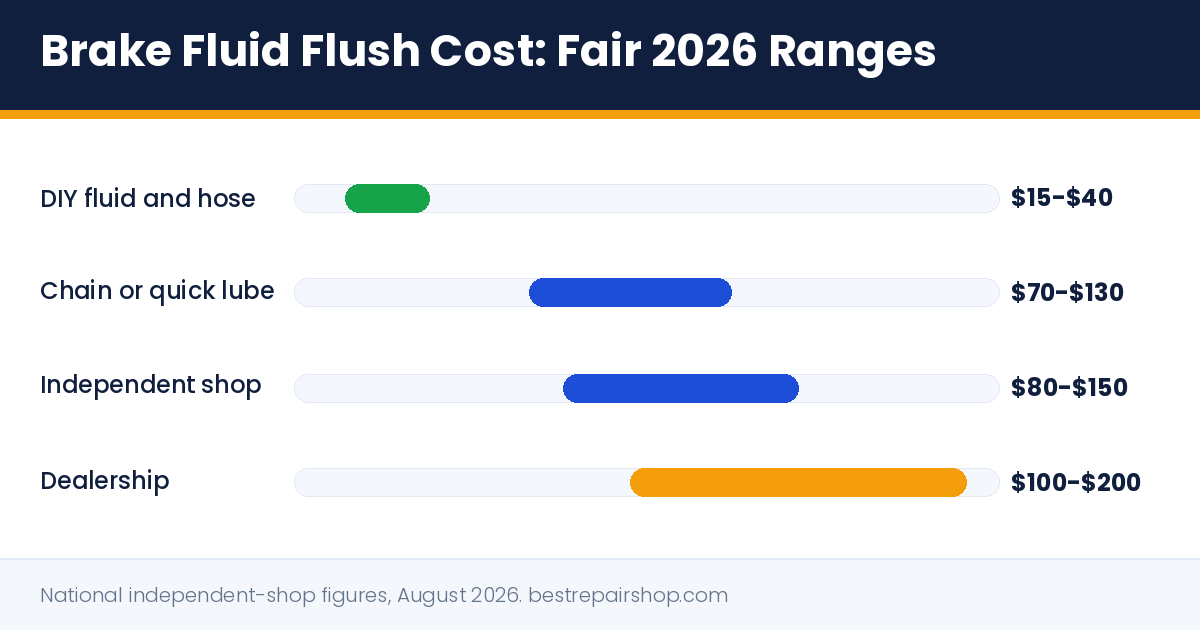
Cost of Brake Fluid Flush: Fair 2026 Prices
A flush replaces essentially all the old fluid in the master cylinder, lines, and calipers with fresh DOT 3 or DOT 4, usually about a liter. At an independent shop the fair window is $80 to $150 and the job takes 30 to 60 minutes on a pressure bleeder. Here is how the cost of brake fluid flush service breaks down by where you take the car.
| Route | Fair 2026 price |
|---|---|
| DIY fluid and a bleed kit | $15-$40 |
| Chain or quick lube | $70-$130 |
| Independent shop | $80-$150 |
| Dealership | $100-$200 |
| If a seized caliper turns up | add $150-$400 |
Ranges are national, independent-shop figures, August 2026. If the quote in your hand sits far above these numbers, ask what else landed on the ticket; our cost guides exist for exactly that conversation.
How Often You Really Need One
Every 2 to 3 years, or roughly every 30,000 to 45,000 miles, and your owner’s manual wins every argument on the exact number. Some manufacturers specify 2 years, some allow 3, and a few say only to test the fluid and change it when it fails. That interval, more than the sticker price, controls what the cost of brake fluid flush maintenance adds up to over a decade of ownership.
Testing is the honest shortcut. A moisture test strip costs a few dollars, takes 60 seconds, and turns the whole debate into a number. Fluid above roughly 3 percent water content is due; below that, keep your money and drive on. A good shop shows you the strip, not just the invoice.
Why Brake Fluid Goes Bad in the First Place
Brake fluid is hygroscopic, which is the lab word for it drinks water straight out of the air. Fresh DOT 3 boils around 400 degrees Fahrenheit; load it with a few percent water and the working boiling point can fall by more than 100 degrees. On a long downhill grade with a loaded car, that gap is the difference between a firm pedal and a soft one.
Water also corrodes the system from the inside, and it picks expensive targets: ABS pumps and modules commonly run $800 and up, and calipers seize at $150 to $400 apiece. A flush every few years is cheap insurance against that list, which is why we treat this one as real maintenance and not shop theater.
The Upsell: When a Flush Pitch Is Padding
The padding move is frequency, not price. A flush pitched at every oil change, or every 12 months on a car whose manual clears 3 years, is a revenue line, not maintenance. The color-scare version, where dark fluid in the reservoir justifies a same-day flush, skips the fact that fluid darkens naturally; only a moisture or copper test actually tells you anything.
Ask two questions: what does the manual specify, and what did the fluid test read. A shop that answers both plainly is a keeper, and our guide on how to find a good mechanic lists more tells like it. The FTC’s auto repair basics page backs you up on declining any work politely and in writing.
DIY or Shop: An Honest Call
A careful driveway flush is doable with a $15 bleed kit, a liter of fresh fluid, and either a helper on the pedal or a one-person vacuum bleeder. The bleed order matters, air in the lines is the enemy, and brake fluid strips paint on contact. Budget about 90 minutes the first time.
Two honest caveats. Some ABS units need a scan-tool cycle to purge completely, and a soft pedal afterward means the car is not safe until it is fixed. If you already handle your own pads (see how to change brake pads), add this job to the list. If not, $80 to $150 at an independent shop is fair money for the right tools and a firm pedal.
FAQ
Is a brake fluid flush really necessary?
Yes, on your manual’s schedule, because the fluid absorbs water and loses boiling point as it ages. It is not necessary at every service visit, and it is not an emergency the day the fluid looks dark. The test strip and the manual make the call, not the calendar on the shop wall.
How long does a brake fluid flush take?
About 30 to 60 minutes at a shop with a pressure bleeder, closer to 90 minutes in a driveway with hand tools. Shop labor commonly bills at $75 to $200 an hour, so a routine flush invoiced at 2 or more hours deserves a question.
What happens if you never change brake fluid?
The fluid slowly fills with water, the pedal softens under hard use, and corrosion starts picking off expensive parts: calipers at $150 to $400 each and ABS hardware at $800 and up. Nothing fails on a schedule, which is exactly how the damage sneaks up on people.
Is the cost of brake fluid flush the same as a brake bleed?
No. A bleed pushes air out and swaps a small amount of fluid near the calipers, typically $50 to $100. A flush replaces the full volume in the system. Shops sometimes quote one and perform the other, so make sure the word on the estimate matches the job you want.