
If your car jerks when accelerating, the cause is usually one of six things, and the list starts cheap: a dirty air filter or throttle body is a $20 to $150 fix, worn spark plugs run $80 to $350, and a failing sensor sits around $150 to $400. The one to rule out early is a slipping transmission, where a $100 to $250 fluid service caught in time can head off four-figure work. Your car is talking to you; the trick is checking the causes in the right order, cheapest first.
On this page: 6 causes Cheap first Fuel and spark Transmission Costs Shop checklist FAQ
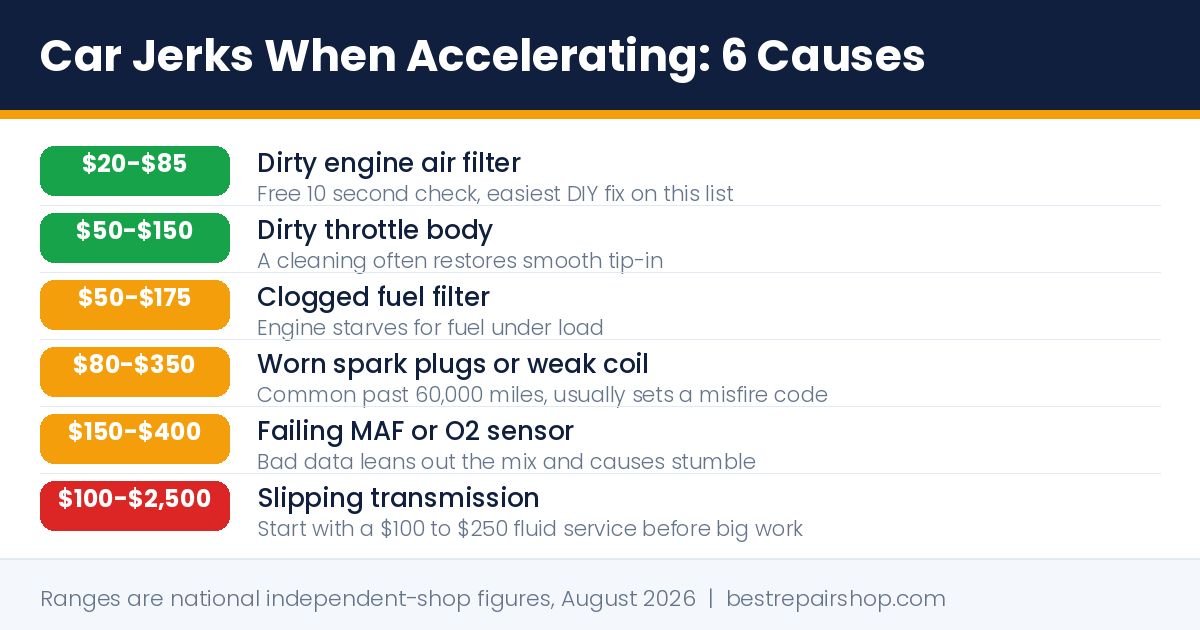
Why a Car Jerks When Accelerating: 6 Causes
A jerk, stumble, or hesitation under throttle means the smooth flow of power got interrupted somewhere. There are only four supply lines that matter: air, fuel, spark, and the transmission’s grip on the engine. When a car jerks when accelerating, one of those four is coming up short.
Ranked from cheapest to most serious, the six usual suspects are: a dirty engine air filter ($20 to $85), a gummed-up throttle body ($50 to $150), a clogged fuel filter ($50 to $175), worn spark plugs or a weak ignition coil ($80 to $350), a failing MAF or O2 sensor ($150 to $400), and a slipping transmission (anywhere from a $100 fluid service to real repair money).
Start With the Two Cheapest Checks
The engine air filter is a free, 10 second check: open the airbox, hold the filter up to a light, and if you cannot see light through it, it is done. A starved engine hesitates, and the fix costs less than lunch. Our guide on when to change your engine air filter walks through it.
Second is the throttle body, the valve that meters air into the engine. Carbon builds up on its blade over the years, and the engine stumbles off idle or on light throttle, a jerk when pulling away. A shop cleaning runs $50 to $150, a legitimate fix here, not the upsell it becomes when it shows up uninvited on an oil change ticket.
Fuel and Spark Problems
A clogged fuel filter lets the engine idle happily but starves it under load, so the jerking shows up under real acceleration, merging or climbing a hill. Replacement runs $50 to $175 on cars that have a serviceable filter. Weak fuel pumps behave the same way, so a good shop tests fuel pressure before selling you either part.
Spark is next. Worn plugs or a weak coil cause a misfire, which feels like a rhythmic jerk or shudder under throttle, often past 60,000 miles. Most misfires turn on the check engine light, sometimes flashing, which means back off and get it read soon. Our check engine light guide covers what the light patterns mean. A failing MAF or O2 sensor feeds the computer bad numbers and the engine stumbles; replacement typically runs $150 to $400.
When It Is the Transmission
Here is the difference worth learning: an engine problem jerks while the engine strains, but a slipping transmission flares. The tachometer jumps, the engine revs, and the car hesitates before the power catches up, usually between gears. If your car jerks when accelerating and you see that RPM flare, think transmission, not tune-up.
Do not panic at the word transmission. Old, degraded fluid causes a lot of early slipping, and a drain and fill runs $100 to $250. Caught early, that small service can save the four-figure conversation entirely. Our transmission fluid guide explains drain and fill vs the flush machines shops love to sell.
What Each Fix Costs
| Fix | Typical price | Worth knowing |
|---|---|---|
| Engine air filter | $20-$85 | Easy DIY, part is $15-$40 |
| Throttle body cleaning | $50-$150 | Legit fix for off-idle stumble |
| Fuel filter | $50-$175 | Ask for a fuel pressure test first |
| Spark plugs or coil | $80-$350 | Usually sets a misfire code |
| MAF or O2 sensor | $150-$400 | Confirm with a scan, not a guess |
| Transmission fluid service | $100-$250 | Drain and fill; catch slipping early |
Ranges are national, independent-shop figures, August 2026. Dealers typically run 20 to 40 percent higher. If diagnosis is needed, expect a $75 to $200 diagnostic hour, and ask whether it gets credited toward the repair.
What a Good Shop Checks First
An honest shop follows evidence: scan for codes first, look at fuel trim data, test fuel pressure, and inspect the cheap items before recommending parts. If the first proposal is a sensor or a transmission service with no scan data behind it, ask what was actually tested. The FTC’s auto repair basics guide backs you up here: you are entitled to a clear explanation and a written estimate before work begins.
Because jerking usually stores a code, the scan is the shortcut. Know what that should cost before you go; our guide to check engine light diagnosis cost covers what is fair, what is free, and how to keep the fee from being charged twice. More symptom guides live in our symptoms library.
FAQ
Is it safe to drive when my car jerks when accelerating?
Briefly and gently, usually yes. But a flashing check engine light means an active misfire that can overheat the catalytic converter, a $900 to $2,400 part, so pull back and get it scanned within a day or two. Jerking plus an RPM flare points at the transmission; driving hard makes it worse.
Why does my car jerk only at low speed?
Low-speed and off-idle jerking leans toward the air side: a dirty throttle body, a vacuum leak, or early misfire. Highway-speed jerking under hard throttle points more toward fuel delivery, like a clogging filter or tired pump.
Can a dirty air filter really cause jerking?
Yes, when it is badly clogged. The engine cannot pull enough air under acceleration, the computer scrambles to compensate, and you feel hesitation. It is the cheapest cause on the list and takes 10 seconds to check, which is why it goes first.
Will jerking always turn on the check engine light?
Not always. Misfires and sensor faults usually set codes, but a dirty throttle body, a clogging fuel filter, and early transmission slipping often do not. No light does not mean no problem.