
An ABS light on by itself does not mean you have lost your brakes. Your pedal, pads, and hydraulics keep working normally, you have only lost the anti-lock assist. It is usually safe to drive gently to a shop, where a proper scan runs $75 to $200 and the most common fix, a wheel speed sensor, lands around $150 to $350. If a red BRAKE light joins it, that changes everything: pull over and check your fluid before you drive another mile.
On this page: What it means Safe to drive? Causes Repair costs At the shop FAQ
What the ABS Light Actually Means
ABS is a bolt-on safety net over your regular brakes. A small computer watches a speed sensor at each wheel, and if one wheel starts locking during a hard stop, a pump pulses that brake faster than any human foot can. When the computer sees a fault it cannot trust, it shuts the whole system off and lights the dash. That is the key point: the light means the safety net is down, not the brakes.
You will notice nothing in everyday driving. Where it matters is a panic stop on a wet road, gravel, or snow. Without ABS the wheels can lock and slide, so leave more following distance and brake earlier until it is fixed. This is a this-week repair, not a this-minute one, with the exceptions below.
Is It Safe to Drive With the ABS Light On? The 4-Point Answer
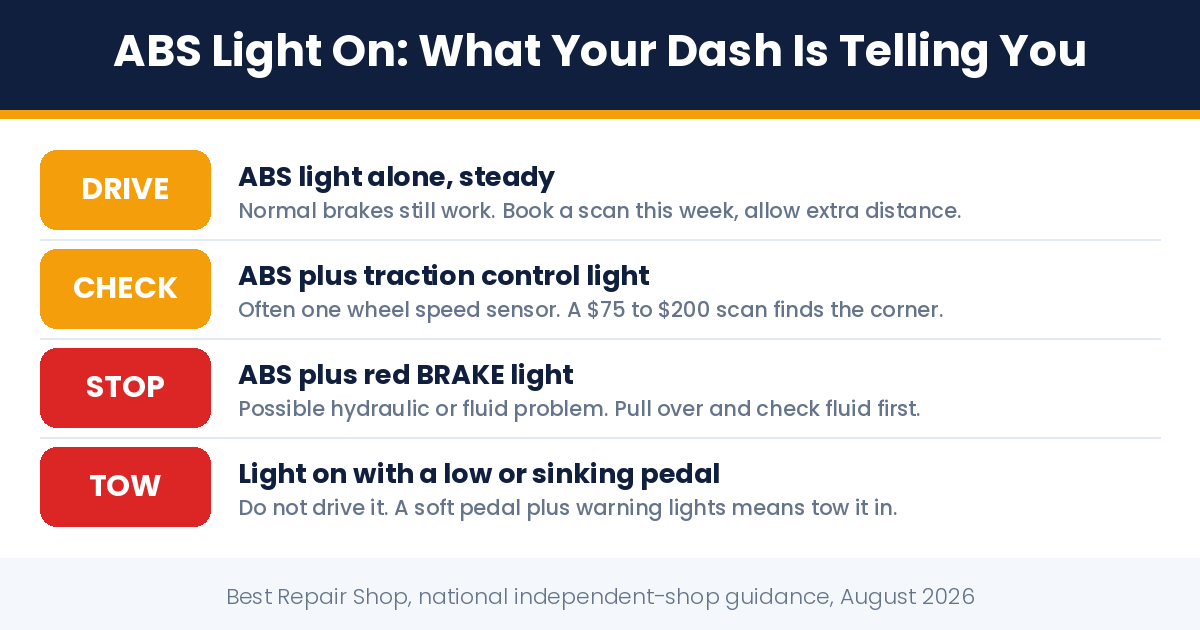
Point 1: ABS light alone, steady. Drive, gently. Braking feels normal because it is normal. Book a scan within the week and do not let anyone sell you panic over the phone.
Point 2: ABS plus the traction control light. Still driveable. These two systems share the same wheel speed sensors, so one bad sensor usually trips both lights at once. That pairing is actually good news on the invoice: it points at a $150 to $350 sensor, not a major hydraulic problem.
Point 3: ABS plus the red BRAKE light. Stop driving. The red light covers low fluid and hydraulic pressure problems, and paired warnings can mean the car is losing real braking power, not just the assist. Check the fluid level in the reservoir; if it is low, something is leaking or your pads are very worn.
Point 4: Any warning light plus a low, soft, or sinking pedal. Tow it. A pedal that travels farther than usual is a hydraulic symptom, and no dash light is required for it to be serious. A tow bill is cheaper than a crumpled fender, every time.
What Causes It: The 5 Usual Suspects
In shop practice, most cases of an ABS light on trace to one of five things. A dead or dirty wheel speed sensor leads the list by a wide margin. Behind it: a rusted or cracked tone ring (the toothed ring the sensor reads), damaged sensor wiring near a wheel, a blown fuse or relay, and, least often and most expensive, a failing ABS module or pump.
One wrinkle worth knowing before you drive to a parts store: the free code readers that handle a check engine light often cannot read ABS codes at all. ABS lives on a separate module that needs a more capable scan tool, which is why this one usually means a shop visit and a fair diagnostic charge.
What the Repair Should Cost
| Repair | Fair price | Notes |
|---|---|---|
| ABS scan and diagnosis | $75-$200 | Should be credited toward the repair at a good shop |
| Wheel speed sensor (each) | $150-$350 | The most common fix by far |
| Tone ring replacement | $150-$450 | Often found rusted or cracked on older cars |
| Fuse or relay | $20-$100 | The cheap fix worth checking first |
| ABS module or pump | $800-$1,800 | Rare; get a second opinion before approving |
Ranges are national, independent-shop figures, August 2026. If a shop jumps straight to the module without showing you a scan report, that is your cue to slow the conversation down. Modules fail, but sensors and wiring fail far more often, and the difference on the invoice is four figures.
What a Good Shop Does First
The honest sequence is boring and cheap: pull the ABS codes, watch live wheel speed data to find the corner that reads zero, then inspect that sensor, its wiring, and its tone ring before ordering anything. Ask for the code and the affected wheel in writing on the estimate. The FTC’s auto repair guide backs you up here: you are entitled to a clear estimate before work begins.
Two more free moves before you approve anything. Run your VIN through the NHTSA recall lookup, because ABS modules and software have been the subject of plenty of recalls, and a recall repair costs you nothing. And if the diagnosis drifts from the ABS toward the brakes themselves, read our brake job cost guide before you sign, then vet the shop against our guide to finding a good mechanic.
FAQ
Can I take a road trip with the ABS light on?
We would not. Driving with the ABS light on is reasonable around town while you wait for a shop appointment, but a highway trip is exactly where anti-lock earns its keep. Get it scanned before you go; if the fix is a sensor, it is often a same-day job.
Will an ABS light fail a state inspection?
In many states, yes. Most safety inspection programs treat an illuminated ABS lamp as an automatic fail, and emissions-only states may still flag it. Check your state’s rules, but assume it needs fixing before your sticker renews.
Can low brake fluid trigger the light?
Yes, on many cars a low fluid level trips the ABS or brake warning. Fluid does not get used up, so a low level means worn pads or a leak. Top it off to get home if needed, but treat the cause, not the level.
Why did the light come on right after new brakes or tires?
A sensor connector left unplugged, a sensor packed with debris, or mismatched tire sizes can all do it. This one goes back to the shop that did the work, at their expense. A reputable shop fixes it without argument.