
Car shakes when braking? The usual cause is uneven brake rotors, and the fix for pads plus rotors runs $250 to $500 per axle. Shaking you feel in the steering wheel points to the front rotors; shaking in the seat or brake pedal points to the rear. It rarely fixes itself, and it gets more expensive the longer the rotors keep wearing unevenly.
On this page: Where you feel it The 5 causes Fair costs When it is serious What to tell the shop FAQ
Where you feel it is the first clue
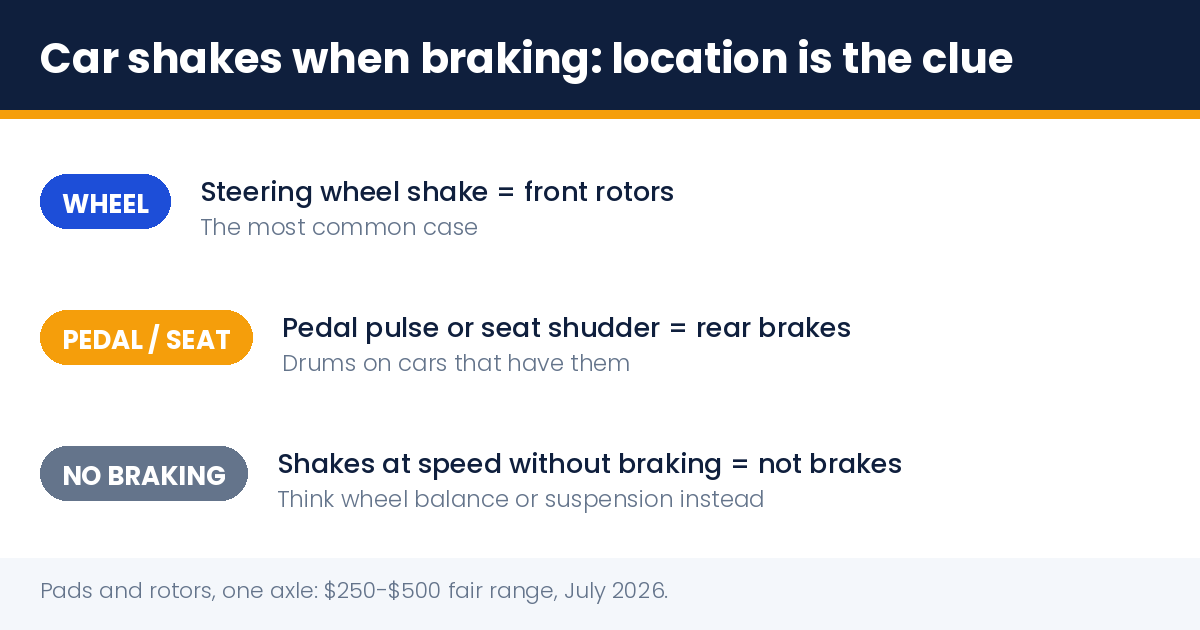
Pay attention on the next few gentle stops, because the location of the shake does real diagnostic work. Steering wheel shakes when braking: front rotors, the most common case. Pulsing you feel in the brake pedal itself or a shudder through the seat: rear brakes, or drums on cars that have them. Shaking that happens at highway speed even when you are not braking is a different problem, usually wheel balance or a worn suspension part, and mixing the two up buys the wrong repair. If the car shakes when braking and at no other time, this page is your page.
The 5 causes, most likely first
1. Uneven rotor surface. The textbook reason a car shakes when braking. Rotors rarely warp like a potato chip; what actually happens is pad material transfers onto the rotor unevenly, or rust pits the surface, so the pads grab and release as the high spots pass. The result is the classic brake shudder that grows with speed.
2. A sticking caliper. A caliper that will not release drags its pad, overheats one rotor, and cooks the surface unevenly. Tell-tale extras: one wheel noticeably hotter than the others after a drive, a burning smell, or the car pulling to one side while braking.
3. Worn suspension components. Control arm bushings and tie rod ends that are worn let the wheel move when braking loads it, which feels like a brake problem and is not. Common on higher-mileage cars, and a good inspection catches it in minutes.
4. A failing wheel bearing. Usually announces itself with a hum that changes in corners before it ever shakes under braking, but a badly worn bearing lets the rotor wobble, and braking amplifies it.
5. Loose or unevenly torqued lug nuts. The cheap one. Wheels tightened around the circle instead of in a star pattern, or hammered on by an air gun, can seat unevenly and stress the rotor. If the shake appeared right after tire work, start here; the check is free.
What each fix fairly costs
| The fix | Fair 2026 price | Note |
|---|---|---|
| Lug nut re-torque | $0-$25 | Free where the tire work was done |
| Pads and rotors, one axle | $250-$500 | The most common real fix |
| All four corners | $500-$1,000 | Per-axle math, both ends |
| Caliper replacement | $150-$400 each | Plus the rotor it damaged, usually |
| Suspension bushing or tie rod | $150-$500 | Varies widely by car and part |
Ranges are national, independent-shop figures, July 2026, and they match our full brake job cost guide, which breaks down how pads, rotors, and labor build the quote. Resurfacing rotors instead of replacing them has mostly disappeared because modern rotors are thin and new ones are cheap; if a shop offers it, it is not a scam, just increasingly rare.
When shaking crosses into serious
Book promptly, drive gently in the meantime: that is the honest posture for a mild brake shudder. Move faster if the shake is joined by grinding (pads are gone and metal is eating the rotor), a burning smell or smoking wheel (sticking caliper, stop driving), a soft or sinking pedal, or braking distances that feel longer. Brakes are the one system where “next month” is not a plan; NHTSA’s recall lookup is also worth ten seconds with your VIN, since brake components do get recalled.
What to tell the shop
Three details turn your vague shake into a fast diagnosis: where you feel it (wheel, pedal, or seat), when it started and whether tire work happened just before, and what speed makes it worst. “Car shakes when braking from highway speed, felt in the wheel, started two weeks ago, no recent tire work” practically writes the work order. Then ask for the old parts back if rotors are replaced. A good shop hands them over without blinking, and our good mechanic guide has the rest of that checklist.
Brake shake FAQ
Is it safe to drive when the car shakes while braking?
For a mild shudder, short-term, driven gently, yes. The brakes still work; they are working unevenly. Treat it as a this-month repair, and as a this-week one if it worsens quickly or adds noise or smell.
Do I have to replace rotors, or can pads alone fix it?
If the rotors are the cause, new pads on bad rotors shake on day one and glaze the new pads on top of it. Pads-plus-rotors on the affected axle is the repair that stays fixed.
Why does it only shake braking from highway speed?
The unevenness passes under the pads more times per second at speed, so the pulses blur into a shudder you can feel. Low-speed stops hide it. That pattern is classic rotor-surface behavior and worth repeating to the shop word for word.
Could it just be my tires?
Tires and balance cause vibration at steady speed, not specifically under braking. If the shake lives only on the brake pedal’s watch, think rotors first. If it is there all the time and braking just makes it louder, get balance and suspension checked in the same visit.