
A burning smell from car vents or the engine bay has six common causes, and most are not emergencies. Burned off dust and new part break-in smells usually cost $0, a slipping serpentine belt runs $100 to $250, and an oil leak dripping on the exhaust runs $150 to $450. Only two smells mean stop driving right now: sharp electrical plastic and hot metallic brakes.
On this page: Safe to drive? Vent smells Burning rubber Burning oil Stop now smells Fair costs FAQ
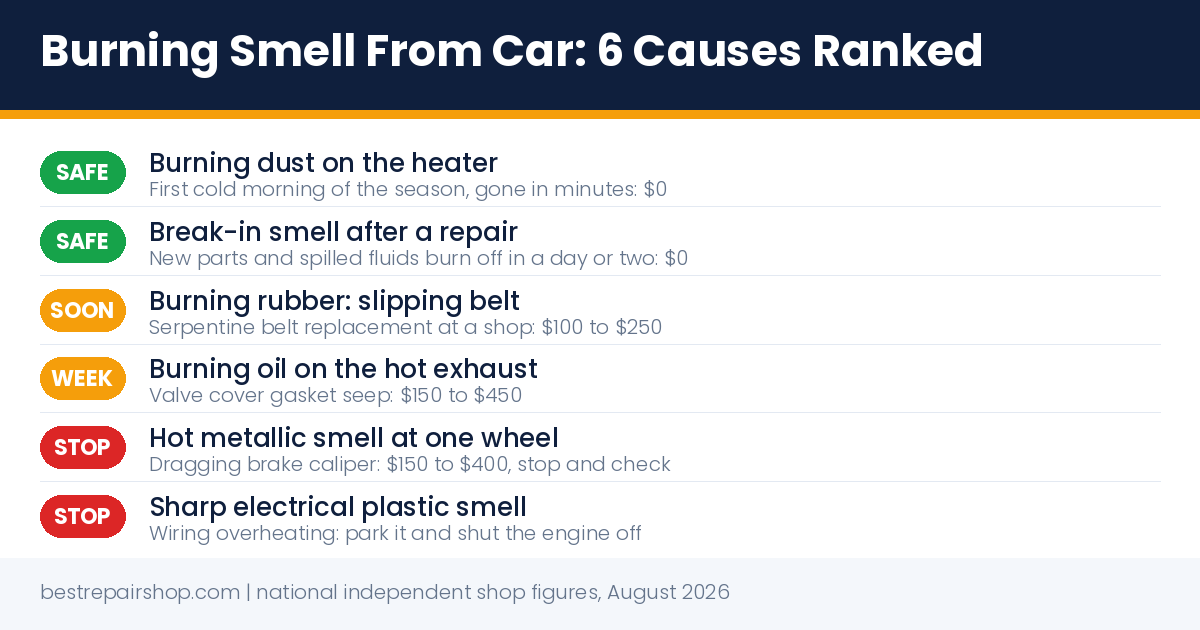
Start Here: Can You Keep Driving?
A dusty or musty smell on the first cold morning of the season is almost always harmless. A rubber smell means something is slipping, and you have days, not weeks. An oily smell with a wisp of smoke means a leak has found something hot. Sharp electrical plastic or hot metal at one wheel means pull over and shut the engine off.
Timing and location matter as much as the odor. Notice when it happens: at startup, with the heat on, or after hard braking. Notice where it is strongest: cabin, engine bay, or one wheel. Those two details cut six causes down to one or two before you ever open the hood.
Burning Smell From Car Vents: The Cheap Causes First
The most common burning smell from car vents is dust cooking off. The heater core and blower housing collect a summer of dust while the AC runs; the first chilly morning you turn on the heat, that layer burns away in five to ten minutes. If it fades and never returns, you are done.
If the dusty smell hangs around, suspect the cabin air filter. One packed with leaves and grit can smell musty or scorched when warm air pushes through. Most sit behind the glovebox, take five minutes to swap, and cost $15 to $30 DIY or $50 to $80 at a shop. A burning smell only when the AC compressor kicks on deserves a look before the compressor fails outright.
Burning Rubber: Belts and Hoses
A burning rubber smell under the hood is usually the serpentine belt slipping on a pulley, often with a squeal as its opening act. Expect $100 to $250 at an independent shop, and do not postpone it: that one belt usually drives the alternator, water pump, and power steering, so when it lets go, everything quits at once.
The other rubber suspects are simpler: a hose or vacuum line resting on a hot manifold, or a plastic bag melted onto the exhaust. Melted debris smells awful for a few days, then burns off. Take a flashlight and check the exhaust path before paying anyone to chase it.
Burning Oil and Sweet Coolant
Burning oil smells thick and acrid, often with a wisp of blue gray smoke after parking. The classic cause is a valve cover gasket seeping oil onto the hot exhaust manifold: $150 to $450 at an independent shop, depending on how buried the cover is. It rarely strands you, but oil on hot metal is a slow fire risk, so make it a this week repair, not a this quarter one.
Coolant is the sweet one. If the odor is closer to maple syrup than burned toast, you are losing coolant onto a hot surface, and low coolant becomes overheating fast. Check the overflow tank when the engine is cold. A sweet smell plus a dropping level calls for a pressure test, usually one diagnostic hour at $75 to $200.
Electrical and Brake Smells: Stop Now
A sharp, acrid plastic burning smell from car wiring is the one that starts fires. Overheating insulation, a failing blower motor, or a shorted accessory can all cause it, and none improve with more driving. Park, shut the engine off, and get it inspected before driving again.
The second stop now odor is hot metal, strongest at one wheel. That is a brake dragging: a stuck caliper, a seized slide pin, or a parking brake left half on. A caliper runs $150 to $400 to replace, and pushing on can cook the rotor and pads with it. If you also hear grinding, read our grinding noise guide before you drive another mile.
What Each Fix Costs
| Cause | Typical fix | Fair 2026 price |
|---|---|---|
| Dust burning off heater | None, fades on its own | $0 |
| Dirty cabin air filter | Replace filter | $15-$30 DIY, $50-$80 shop |
| Slipping serpentine belt | Replace belt | $100-$250 |
| Valve cover gasket leak | Replace gasket | $150-$450 |
| Dragging brake caliper | Replace caliper | $150-$400 |
| Electrical fault | Diagnosis first | $75-$200 per hour |
Ranges are national, independent-shop figures, August 2026. A good shop will show you the failed part and connect it to the smell you described; the FTC’s auto repair basics guide backs you up on asking. For fair prices on whatever the diagnosis turns up, start at our costs hub.
Burning Smell Questions, Answered
Why does my car smell like burning but I see no smoke?
Most burning smells arrive well before anything visible. Dust, a slipping belt, and small oil seeps all make strong odors with nothing to see. Use location and timing to narrow it down, and treat a smell that strengthens over a single drive as a stop and look situation.
Is a burning smell normal after an oil change or new brakes?
Yes, briefly. Spilled oil burning off the exhaust after an oil change, or new pads curing during their first hard stops, can smell alarming for a day or two. Past a week, or with a dropping oil level, go back and have the shop check its work.
Can I drive with a burning smell from car AC vents?
If it is the first cold morning dust smell, yes, it clears in minutes. If it appears every time the compressor engages, or arrives with smoke or a warning light, stop and get it checked. Cabin smells ride in on the air you breathe, so do not live with one for months.
Is a rotten egg smell the same problem?
No. A sulfur or rotten egg odor points at an overworked catalytic converter, not something scorching, and it has its own causes and price tags. Our rotten egg smell guide walks through them and why waiting gets expensive.
Keep going
- If the smell is fuel, not smoke: what a gas smell means
- Brake smells often end in a brake job: fair brake job prices
- Find a shop that shows you the part: how to find a good mechanic