
A squealing noise when starting car engines cold is almost always the serpentine belt system: the belt itself, the tensioner that keeps it tight, or a pulley it rides on. A new belt runs $80 to $250 installed at an independent shop, and the part alone is $25 to $75. If the squeal fades in the first 30 to 60 seconds, your car is talking about the belt, not the engine. Here is how to tell which fix you actually need.
On this page: Why it squeals Belt or tensioner 3 honest fixes What it costs If you wait FAQ
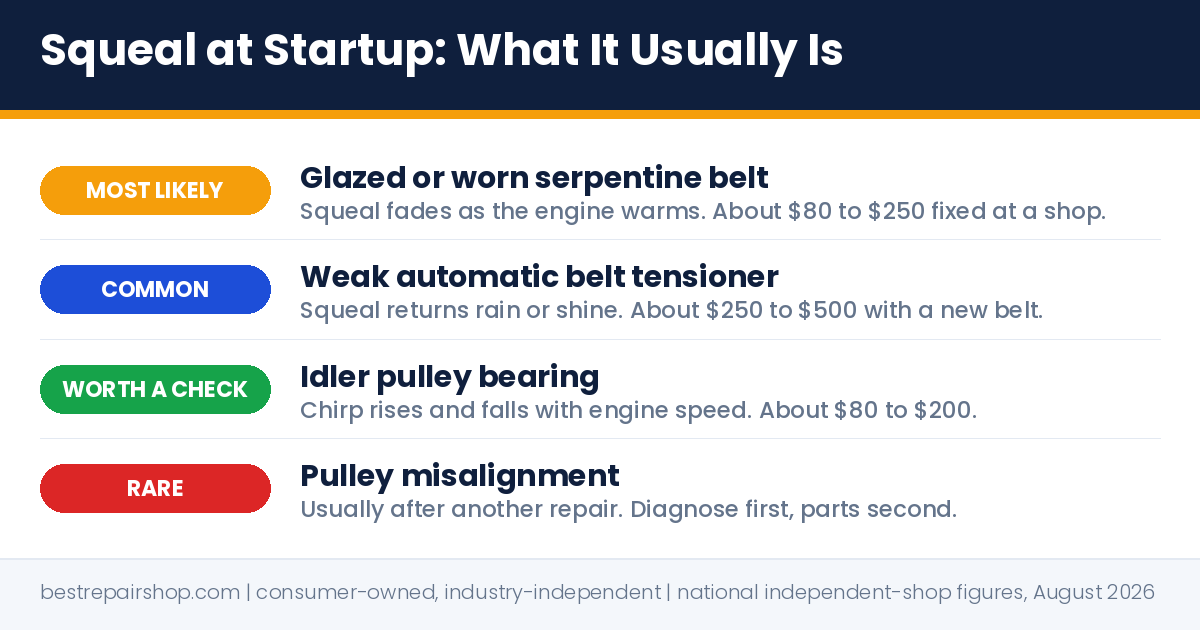
Why your car squeals at startup
That high pitched cry on a cold morning is rubber slipping on metal. Your serpentine belt wraps around five or six pulleys and drives the alternator, the power steering pump on many cars, the AC compressor, and often the water pump. As a belt ages it hardens and glazes, and a glazed belt grips worst exactly when it is cold and damp. The crank pulley spins, the belt slips instead of gripping, and that slip is the squeal you hear.
A squealing noise when starting car engines that fades within 30 to 60 seconds points at the belt or a tired tensioner warming up and gripping again. A squeal or chirp that stays with you down the road, rising and falling with engine speed, points at a pulley bearing instead. Either way, this is one of the cheaper noises a car can make, which is the good news hiding inside it. You will find more driveway diagnoses in our symptoms library.
Belt, tensioner, or pulley: a 60 second driveway check
Start with the engine off and cool. Find the widest belt at the front of the engine and look at the ribbed side with a flashlight. Three or more cracks in any one inch of a rib means the belt is done. A shiny, glassy surface on the ribs means glazing. Frayed edges or missing chunks mean it should not wait for a convenient weekend.
For the tensioner, have a helper start the engine while you watch the tensioner arm from a safe distance, hands and loose clothing clear. A healthy arm sits nearly still. An arm that flutters or shudders has a weak spring, and a weak spring will make even a brand new belt squeal. Most tensioners also have wear marks: if the pointer sits at the end of its range, the tensioner is finished. That is the whole diagnosis, and a good shop does it in minutes.
3 honest fixes for a squealing noise when starting car engines
Fix 1: a new belt. This is the answer for most people. The part is $25 to $75, labor is 30 to 60 minutes, and for most drivers a fresh belt ends the squealing noise when starting car engines cold. Spend the few extra dollars for a name brand EPDM belt; the bargain-bin ones glaze faster.
Fix 2: the tensioner, done with the belt. If the arm flutters or the wear marks are maxed out, replace the tensioner and belt together, about $250 to $500 total. A new belt on a weak tensioner squeals again within months, so this pairing is honest work, not padding.
Fix 3: the idler pulley. A chirp that follows engine speed is often a dry idler bearing, about $80 to $200 fixed. One thing to skip: belt dressing spray. It buys a quiet week by making the belt sticky, then the sticky surface collects grit that chews the ribs. It is a bandage, not a fix.
What each fix costs
| Fix | Fair 2026 price |
|---|---|
| New serpentine belt, independent shop | $80-$250 |
| New belt, DIY part only | $25-$75 |
| Belt + tensioner together | $250-$500 |
| Idler pulley | $80-$200 |
Ranges are national, independent-shop figures, August 2026. Dealers typically run $150 to $350 for the belt alone. The full breakdown, including what drives a quote toward either end, is in our serpentine belt replacement cost guide.
What happens if you wait
A glazed belt can cry for months before it lets go, so this is a countdown, not an emergency. But when a serpentine belt does snap, everything it drives stops at once: the steering goes heavy, the battery light comes on, and if it drives your water pump, the temperature gauge starts climbing within minutes. A $150 belt problem becomes a tow and a very bad morning.
If a shop turns your squeal into a $700 estimate, slow down. Ask them to show you the flutter or the cracks, ask for the old parts back, and get the estimate in writing before anyone touches a wrench. The FTC’s auto repair basics guide backs you up on all three.
FAQ
Can I keep driving with a squealing belt?
For a while, yes. A squeal that fades after startup usually means the belt still has some life, but it is telling you to book the repair. Once you see cracks, fraying, or a fluttering tensioner, get it done within days, not weeks, because a snapped belt can strand you and overheat the engine.
Why does it only squeal on cold or damp mornings?
A squealing noise when starting car engines on cold, damp mornings is classic glazing. Cold rubber is stiffer and grips less, and overnight moisture on the pulleys acts like a lubricant in exactly the wrong place. As the engine warms and the moisture burns off, the belt grips again and the noise fades.
Will belt dressing spray fix it?
No. Belt dressing quiets the squeal for days by making the belt tacky, then the tacky surface picks up dust and grit that wear the ribs faster. If a $25 to $75 part fixes the problem properly, the spray is not saving you money. Most shops consider it a diagnostic clue at best.
Could the squeal be my brakes instead?
Listen for the timing. Belt squeal happens at startup and idle, parked in your driveway. Brake squeal happens while the car is rolling and usually changes when you press the pedal. If your noise shows up while driving or braking, start with our squeaky brakes guide instead.