
A fair wheel alignment cost in 2026 is $75 to $120 for a two wheel front alignment and $100 to $200 for a four wheel alignment at an independent shop. Dealers charge $30 to $80 more for the same rack time. Every real alignment comes with a before and after printout; no printout means you bought a promise, not an alignment.
On this page: Fair prices 2 vs 4 wheel The printout Extra charges When you need one Lifetime plans FAQ
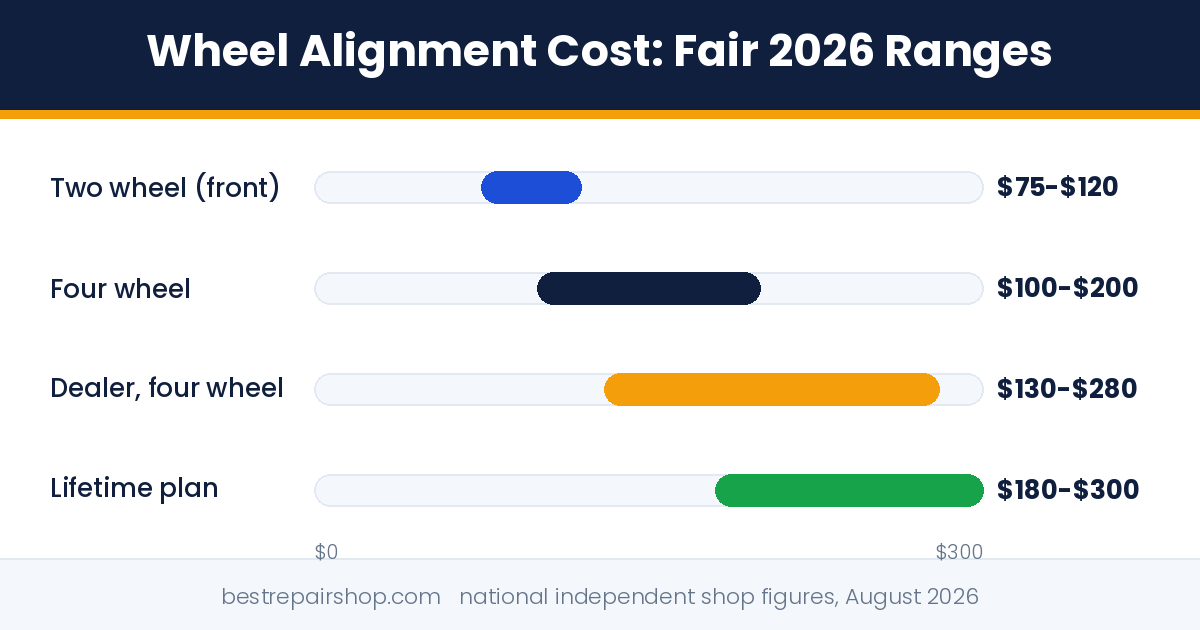
What a fair wheel alignment cost looks like in 2026
An alignment is one of the more honest line items in this business: the machine does the measuring, the tech does the adjusting, and the whole job takes about an hour. That is why the price band is narrow. When a quote lands far outside these ranges, something other than the alignment is being sold.
| Service | Fair 2026 range |
|---|---|
| Two wheel (front) alignment | $75-$120 |
| Four wheel alignment | $100-$200 |
| Dealer four wheel alignment | $130-$280 |
| Camber or caster kit, parts if needed | $50-$150 |
| Lifetime alignment plan | $180-$300 |
Ranges are national, independent-shop figures, August 2026. Big chain tire stores usually sit in the middle of the band and discount the job when you buy tires.
2 wheel vs 4 wheel: which one your car needs
A two wheel alignment adjusts only the front. A four wheel alignment measures and adjusts all four corners, and it is what almost every modern car needs, because anything with independent rear suspension, which covers most sedans, crossovers, and EVs, has adjustable rear angles. The wheel alignment cost difference between the two is usually $25 to $80, and skipping the rear on a car that needs it is a half measure.
The main exception is a truck or older SUV with a solid rear axle: there is nothing to adjust back there, so a front alignment done with reference to the rear axle, often called a thrust alignment, is the correct and cheaper job. If a shop quotes four wheel pricing on a solid axle pickup, ask why.
The printout is the product
An alignment rack measures three angles at each wheel: toe, which does most of the tire wearing, camber, the inward or outward lean, and caster, which affects steering feel. The machine prints the readings before and after, with out-of-spec numbers in red and corrected numbers in green. That sheet is your proof the work happened.
Ask for it every time. A shop that hesitates to hand over the printout is telling you something. The FTC’s auto repair basics makes the same point about repair orders generally: get it in writing. This is the single best habit in our guide to finding a good mechanic.
Where the bill grows: kits, seized bolts, and worn parts
Three add-ons show up on alignment invoices, and only some of them are honest. Camber or caster kits, at $50 to $150 in parts, are legitimate when a car has no factory adjustment left, common after a hard pothole hit. Seized adjuster bolts on rust belt cars can add a half hour of torch and penetrant labor, also legitimate, and a good shop warns you before proceeding.
The third case is the one that matters: worn tie rods, ball joints, or bushings. Aligning a car with loose parts is wasted money, because the angles will not hold. The honest move is to stop, show you the play in the part, and align after the repair. A shop that aligns it anyway and books you for the parts next month just charged you for the same wheel alignment cost twice.
When you actually need an alignment, and when to skip it
Real triggers: new tires going on, a pothole or curb strike hard enough to make you wince, a steady pull to one side, a steering wheel that sits crooked on a straight road, or feathered wear on a tire edge. Protecting fresh rubber is the best money case: misalignment can chew the inside edge off new tires in months, as our guide to how long tires last shows.
Skip it when it is offered as a routine add-on to an oil change on a car with no symptoms and even tire wear. Alignment is not a mileage service. It is a condition service: no symptoms, no impact, no new tires, no alignment. A yearly check is cheap insurance on rough roads, but do not confuse a check with an automatic adjustment.
Are lifetime alignment plans worth the money?
The big chains sell lifetime plans at $180 to $300, which breaks even at your second or third visit. The math works if you keep the car five years or more, drive pothole country, or put on tires often. It fails if you lease or trade every three years. Read the transfer terms: most plans die with the car’s sale, and every visit doubles as an inspection opportunity for the shop, so treat their findings as quotes, not verdicts.
FAQ: fair alignment questions
How long does a wheel alignment take?
Plan on 45 to 60 minutes of rack time for a straightforward car. Add time for seized adjusters, a kit installation, or a shop that road tests before and after, which is a good sign, not padding.
How often do you need a wheel alignment?
There is no honest mileage interval. Align when you buy tires, after a hard impact, or when symptoms show up. On rough roads, an annual check, often free at tire chains hoping to sell the adjustment, is reasonable, but only pay to adjust when the printout shows red.
Will insurance pay the wheel alignment cost after a pothole?
Sometimes, under collision coverage, if the same impact caused other damage like a bent wheel. For an alignment alone, your deductible is usually higher than the job, so filing rarely makes sense. Some cities and states run pothole damage claim programs, and those are worth the form.
Does a four wheel alignment fix a crooked steering wheel?
Yes, centering the steering wheel is part of a proper alignment, and it should come back straight. If the wheel is still off center on pickup, that is a comeback: take it back the same week and ask them to finish the job, at no charge.